
Vitamin D3 IU Explained: What 800 IU Drops and 200,000 IU Chewables Mean
If you have looked at vitamin D3 packs in a Pakistani pharmacy, you will have seen numbers like 400 IU, 800 IU and even 200,000 IU. They look very different, and they are. This guide explains what “IU” means, how much vitamin D the body normally needs, and why some strengths are only used when a doctor prescribes them.
What does IU mean?
IU stands for International Unit. It measures the biological activity of vitamin D rather than its weight. Some labels show micrograms (mcg) instead. The conversion is simple:
1 mcg of vitamin D = 40 IU. So 10 mcg = 400 IU, 15 mcg = 600 IU, and 20 mcg = 800 IU.
How much vitamin D is needed each day?
The US National Institutes of Health (NIH) lists these recommended daily amounts:
| Age | Daily amount |
|---|---|
| Birth to 12 months | 400 IU (10 mcg) |
| 1 to 70 years | 600 IU (15 mcg) |
| 71 years and above | 800 IU (20 mcg) |
| Pregnancy and breastfeeding | 600 IU (15 mcg) |
The NIH also sets an upper limit for everyday intake, for example 1,000 IU for babies under 6 months and 4,000 IU for adults. Going above these limits regularly, without a doctor’s advice, is not recommended.
Why are there such different strengths?
- Daily drops and tablets (for example 400 to 1,000 IU) are used for regular, everyday intake.
- High-dose products (for example 50,000 or 200,000 IU) are given at longer gaps, such as once a week or once every few weeks or months. A doctor decides this, usually after a blood test, based on age, weight and vitamin D level.
Important: a 200,000 IU chewable is not a daily supplement. Take high-dose vitamin D only exactly as your doctor or pharmacist tells you. Very high blood levels can cause nausea, vomiting, weakness, confusion, excessive thirst and kidney stones.
Where does vitamin D come from?
The body makes vitamin D when bare skin gets sunlight. Clouds, smog, older age and darker skin all reduce how much is made. Foods such as fatty fish (salmon, tuna, mackerel) and fish liver oils also contain vitamin D, and some milk and cereals are fortified.
According to the NIH, people who may need extra vitamin D include breastfed infants, older adults, people who get little sun, people with darker skin, and people with conditions that affect fat absorption.
Reading a vitamin D3 label
- Check the unit: IU or mcg, and whether the amount is per drop, per ml or per tablet.
- Check how often: daily, weekly or a single dose.
- Check the form: D3 (cholecalciferol) is the form most supplements use.
Vitamin D3 products at Medlife Healthcare
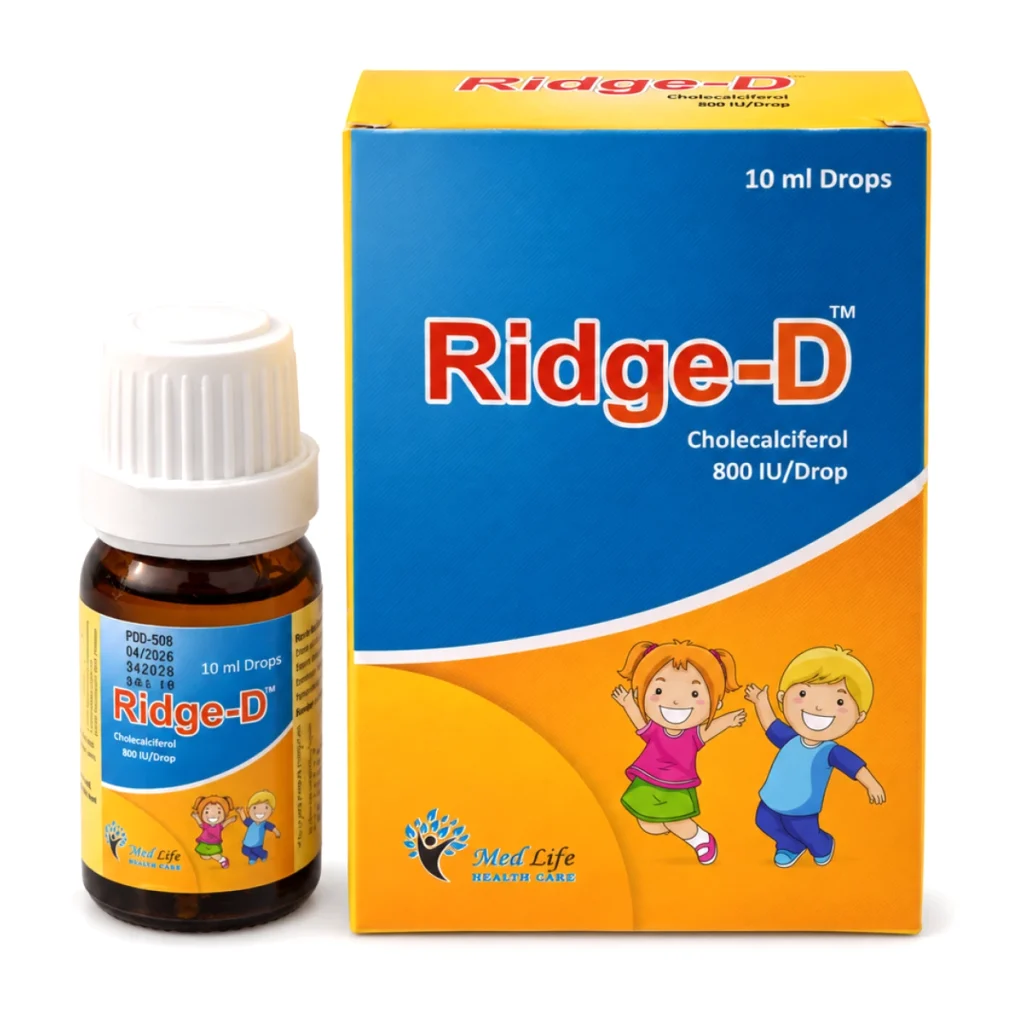
- Ridge-D Drops 10 ml: vitamin D3 800 IU per drop.
- D-UP 200,000 IU: high-dose chewable, only as directed by a doctor.
Frequently asked questions
Is 800 IU the same as 20 mcg?
Yes. Divide IU by 40 to get micrograms: 800 ÷ 40 = 20 mcg.
Can I take a 200,000 IU dose every day?
No. High doses like this are given at long intervals and only on medical advice.
Do I need a blood test first?
For high-dose vitamin D, doctors often check your vitamin D level first. Ask your doctor.
This article is for general information only. It does not diagnose, treat or prevent any condition. Always consult your doctor or pharmacist before starting any supplement.
Source: NIH Office of Dietary Supplements, Vitamin D Fact Sheet for Consumers