

What Is Algae Calcium? How It Differs From Regular Calcium
Walk into any pharmacy and you will find calcium supplements labelled calcium carbonate, calcium citrate and, more recently, algae calcium. This guide explains where algae calcium comes from, how it compares with other forms, and how much calcium adults generally need.
Where does algae calcium come from?
Algae calcium is made from the mineral-rich skeleton of red marine algae, a type of seaweed. A commonly used species is Lithothamnion calcareum, which grows in the Atlantic waters off Ireland and Iceland. As the algae grows, it builds up minerals from seawater; the remains are collected, cleaned and milled into a fine powder.
A laboratory analysis published in the International Journal of Food Science & Technology found this material contained about 30% calcium and 6% magnesium by weight, along with small amounts of other minerals.
How is it different from regular calcium?
| Calcium carbonate | Calcium citrate | Algae calcium | |
|---|---|---|---|
| Source | Mined limestone or shells | Made in a lab | Red marine algae |
| Other minerals | Usually none | Usually none | Naturally contains magnesium and trace minerals |
| Take with food? | Yes, absorbed best with meals | With or without food | Follow the label; usually with meals |
Chemically, the calcium in algae is mostly in the carbonate form. The main difference is that it comes from a plant source and naturally carries magnesium and other minerals with it.
How much calcium do adults need?
| Group | Daily amount |
|---|---|
| Adults 19 to 50 years | 1,000 mg |
| Women 51 years and above | 1,200 mg |
| Men 51 to 70 years | 1,000 mg |
| All adults 71 years and above | 1,200 mg |
This total includes calcium from food (milk, yoghurt, cheese, leafy greens, fortified foods) as well as any supplements. The NIH also sets upper limits: 2,500 mg a day for adults aged 19 to 50, and 2,000 mg a day from age 51.
Tips for taking a calcium supplement
- Split the dose: the body absorbs calcium best in amounts of 500 mg or less at a time.
- Vitamin D matters: it is needed for calcium to be absorbed in the gut. Many calcium products include vitamin D3.
- Count your food too: a supplement fills the gap; it is not meant to replace calcium-rich food.
Check with your doctor if you take other medicines. Calcium can reduce the absorption of some medicines, for example thyroid tablets (levothyroxine) and certain antibiotics, so they usually need to be taken a few hours apart. Calcium supplements can also cause gas, bloating or constipation in some people.
Algae calcium products at Medlife Healthcare
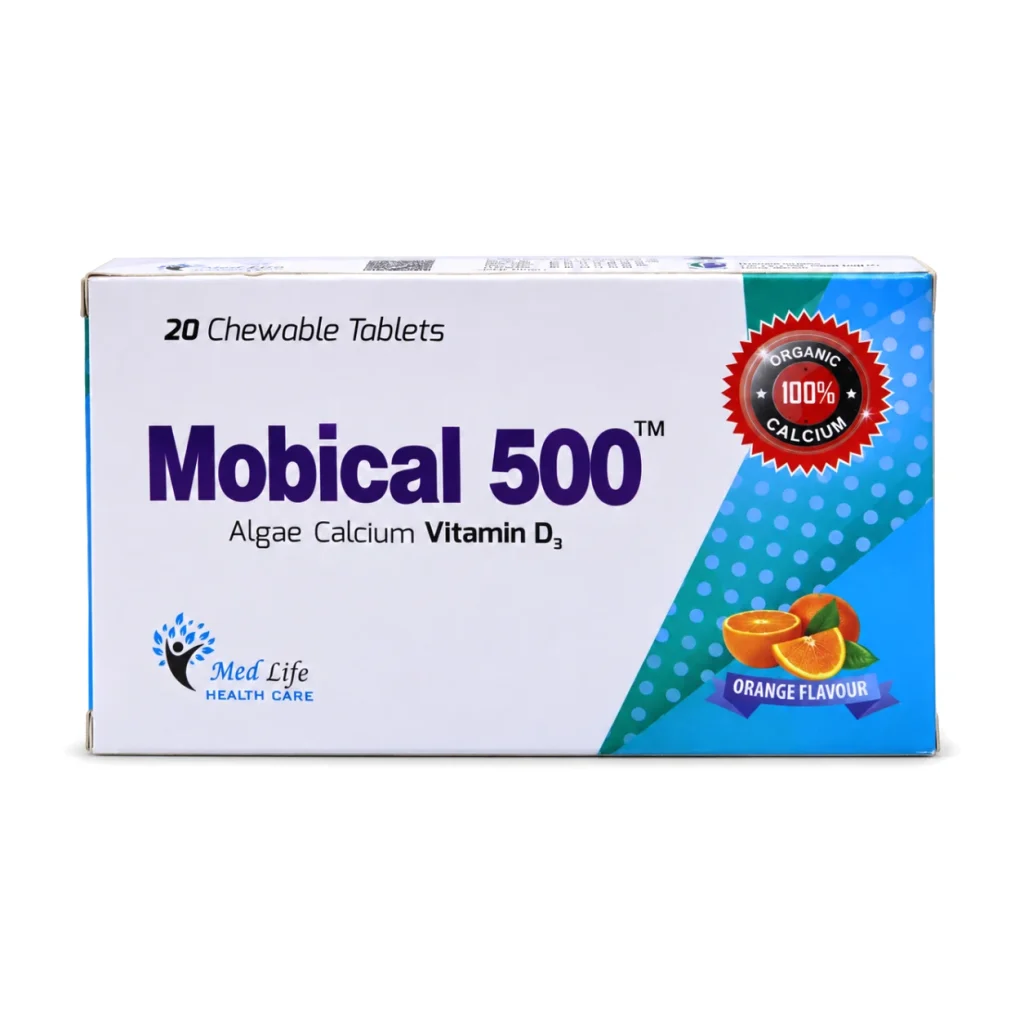
- Mobical-500: 500 mg algae calcium per tablet with vitamin D3, magnesium, zinc, copper and manganese.
- Mobical-750: algae calcium and magnesium tablets.
Read more: Mobical algae calcium and magnesium tablets.
Frequently asked questions
Is algae calcium vegetarian?
It comes from seaweed, not animals or shells. Check the full label, as other ingredients and the tablet coating may differ between products.
Can I take all my calcium at once?
It is usually better to split it, because the body absorbs about 500 mg or less at a time best.
Do I still need vitamin D?
Yes. Vitamin D helps the body absorb calcium. Your doctor can tell you whether you need a supplement.
This article is for general information only. It does not diagnose, treat or prevent any condition. Always consult your doctor or pharmacist before starting any supplement.
Sources: NIH Office of Dietary Supplements, Calcium Fact Sheet; Zhu et al., International Journal of Food Science & Technology, 2014